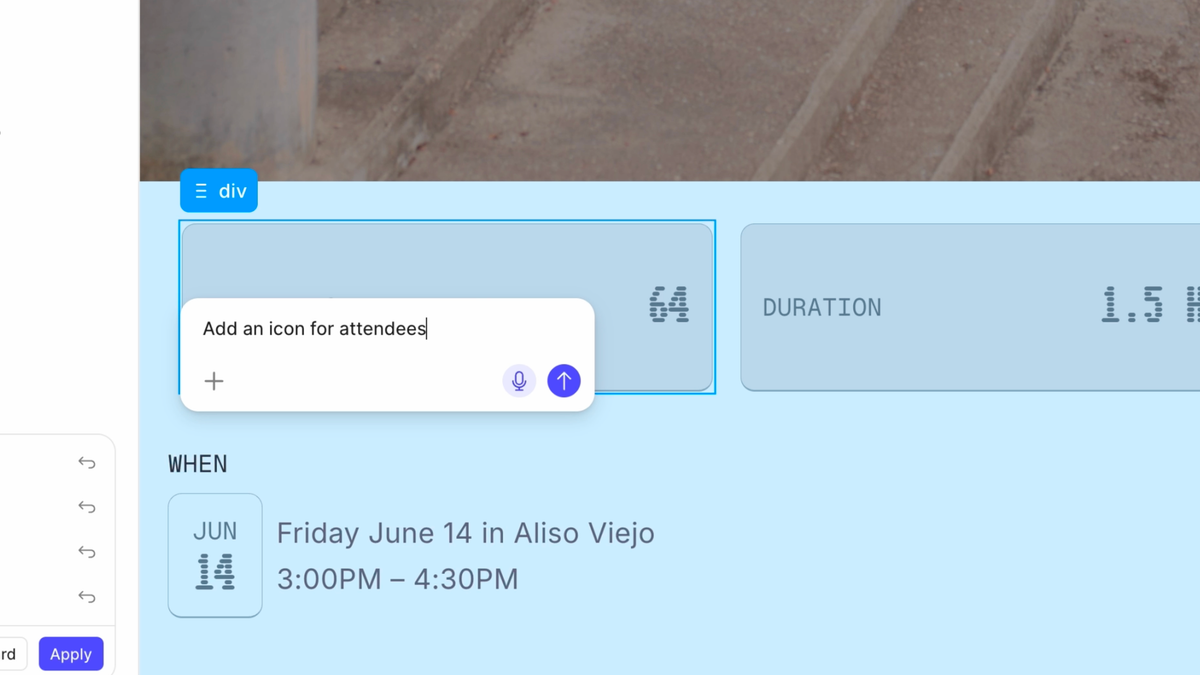
Figma Make Now Connects Directly to Your Real Code
Figma launched a limited beta on May 28 that connects Figma Make to your actual local codebase. You prompt the AI agent on a specific element, describe the change in plain text or use the editing panel, and the coding agent makes the edits in your real project files — including opening pull requests. Design intent becomes shipped code without leaving Figma.
AI Is Creating Hybrid "Frankenjobs" in Design
Fast Company covered the second annual AI in Design report from investor firm Designer Fund, surveying 900+ designers across 60+ countries at companies including Stripe, Notion, Shopify, and Anthropic. The headline finding: job titles are mutating. Roles called "designer engineer," "builder," and "design crafter" are appearing everywhere, blurring the line between designing and building. The survey shows this shift is accelerating, not stabilizing.
Photoshop's Remove Tool Now Works Fully Offline
Adobe's May 26 Photoshop update shipped on-device AI for the Remove Tool — the feature that erases unwanted objects from photos. Until now, this required cloud processing. The same update added Firefly Boards integration (share any Photoshop document directly to a moodboard in one click), major performance improvements across brushes and exports described as "lag-free," and a modernized UI with better keyboard navigation and accessibility.
Figma Built a Native AI Agent Right Inside Your Canvas
Since May 20, Figma has been rolling out its built-in AI agent to users on Professional, Organization, and Enterprise plans. Unlike third-party AI tools added from outside, this agent lives natively in Figma's left rail and knows your actual components, design system, and team files. You prompt it in plain language to generate interface elements, produce iterations of existing designs, or automate repetitive tasks — without ever leaving your canvas.

The Hottest 2026 Design Looks Deliberately Handmade
Coverage across Creative Bloq and It's Nice That has crystallized a clear industry consensus: the most coveted aesthetic in 2026 is tactile, imperfect, and unmistakably human. Designers are scanning printed photos back in for a 1980s magazine texture, scrapbooking and collaging, and picking typefaces that look like tape strips — specifically because AI image generators cannot replicate these layered, mixed-media surfaces. Adobe, Canva, and Stills all named this "authenticity-first" direction as their defining visual trend for the year.
You’re done for today!
5 stories · under 10 minutes. See you tomorrow.
TODAY’S THREADEvery story this week circles the same fault line: AI is becoming a native layer inside the tools you already use — Figma, Photoshop — while the industry is betting harder than ever on what AI genuinely cannot replicate: the texture of human hands, the judgment of hybrid skills, the productive mess of real creative process. The designers who thrive aren't choosing between AI and craft. They're using AI to move faster and their humanity to move deeper.